HiFloat Community Officially Launches, Accelerating the Low-Precision Computing Ecosystem
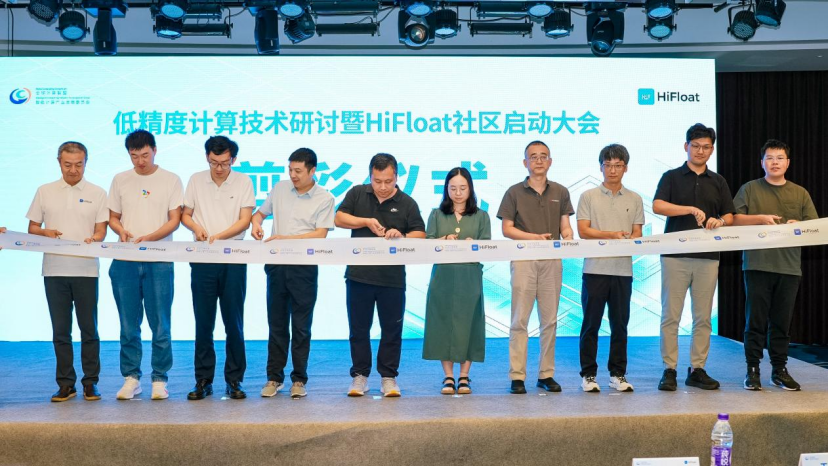
HiFloatCommunity Launch
On August 26, the Low-Precision Computing Technology Workshop and HiFloat Community Launch Conference took place in Beijing. Covering low-bit data format standards, hardware–software co-design, HiFloat technologies and applications, Ascend parallel acceleration, efficient data transmission, and model quantization, the conference officially launched the GCC-HiFloat community and unveiled its initial achievements. Experts from research institutes, universities, chip companies, and AI enterprises gathered to explore the next steps from technical innovation to standardization and industrial adoption.
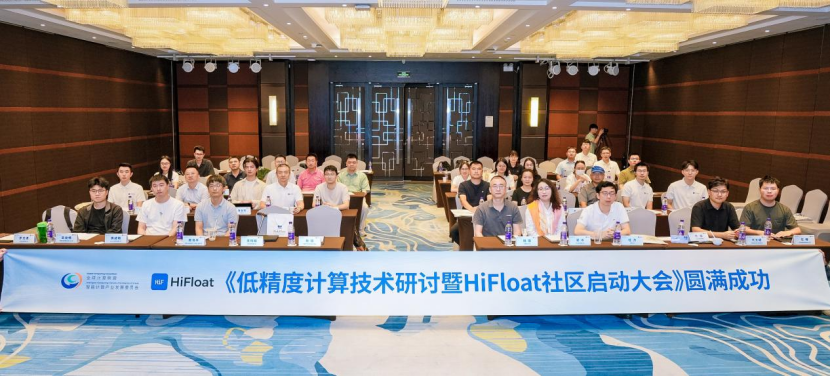
HiFloat Community Officially Launches: Building Low-Precision Technology Together
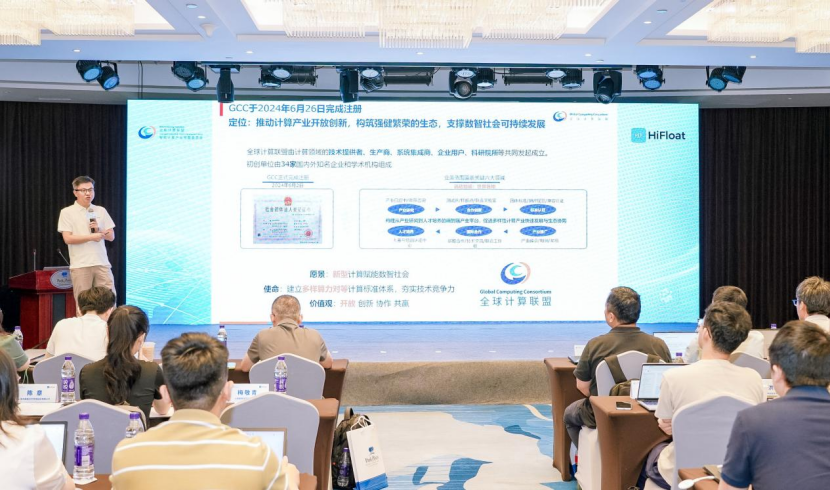
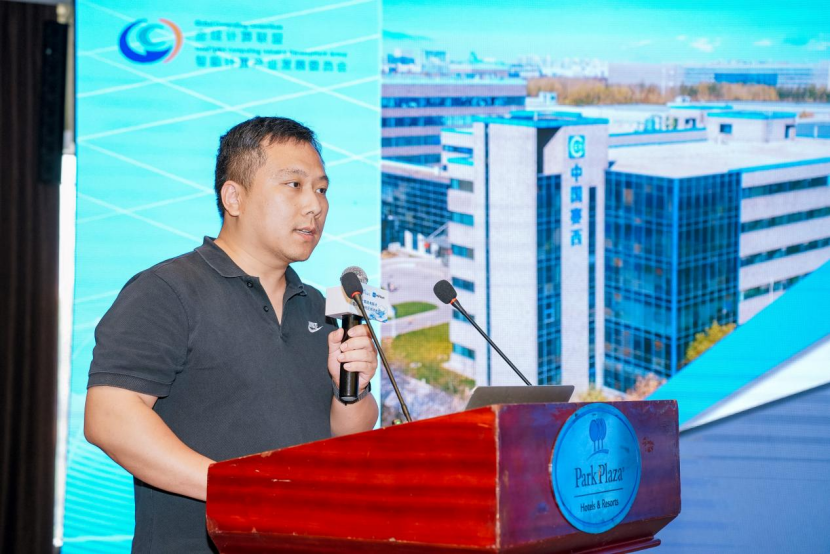
Huanqing Huang, Deputy Secretary-General of the GCC Intelligent Computing Industry Development Committee, introduced the community’s overall roadmap. Guided by openness, sharing, and joint development, the community will open access to HiFloat technologies and standards, share research and practical results on low-precision data formats, and encourage participation across the industry. It will continue work on standards, hardware and software framework support, validation on mainstream models, developer ecosystems, toolchains, and industry research. It will also promote upstream ecosystem support and contribute to national standards and major international standards initiatives, including IEEE.
The conference announced the members of the HiFloat Community Technical Committee: China Electronics Standardization Institute; Shanghai AI Laboratory; Huawei Technologies Co., Ltd.; South China University of Technology; Nanjing University; Qualcomm Wireless Communication Technologies (China) Limited; iFLYTEK Co., Ltd.; Shanghai SenseTime Technology Development Co., Ltd.; Beijing Infinigence AI Technology Co., Ltd.; Beijing Shenzhou Kuntai Information Technology Co., Ltd.; and MetaX Integrated Circuits (Shanghai) Co., Ltd.
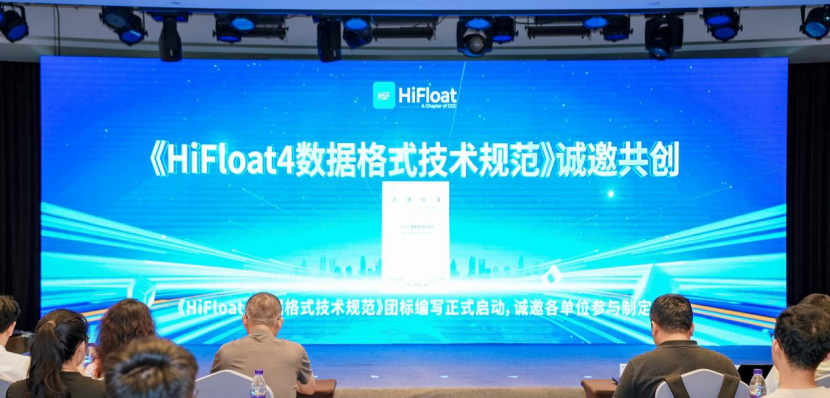
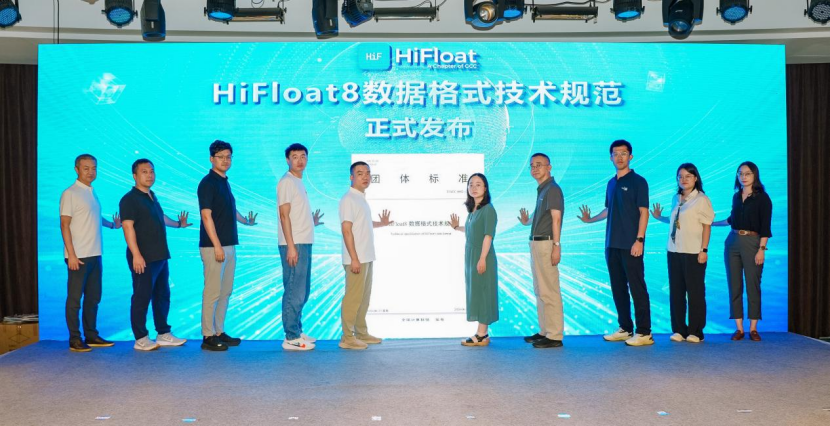
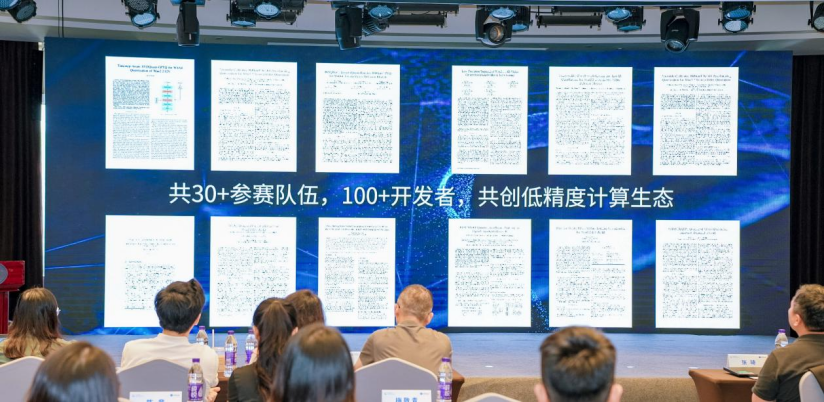
Three community milestones were also announced: the HiFloat8 Data Format Technical Specification association standard, the call for contributors to the HiFloat4 Data Format Technical Specification association standard, and the results of the IEEE ICME Low-Bit Large-Model Quantization Challenge.
Qi Zhang: Establishing a Shared Language for the Low-Precision Computing Industry
Qi Zhang, an AI standardization expert at the China Electronics Standardization Institute, presented “Progress and Plans for National Standards on Low-Bit Data Formats.” He explained that the national standard Technical Specification for Low-Bit Floating-Point Data Formats for Artificial Intelligence is being drafted. The next phase will use large-model training and inference validation to guide pilot projects with chip vendors, model developers, and other industry partners, while advancing international standardization.
Jinming Lu: Coordinating Algorithms, Formats, and Hardware
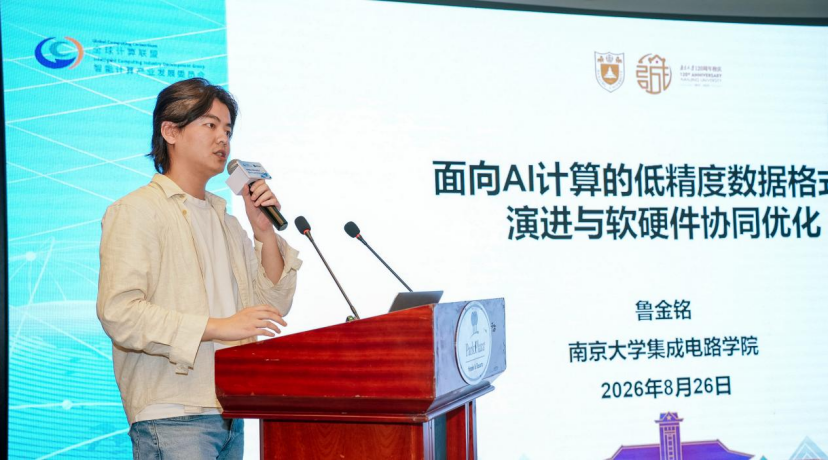
Jinming Lu, Assistant Professor and Specially Appointed Researcher at Nanjing University, explained the value of low-precision computing from a hardware–software co-design perspective. He reviewed the evolution of low-precision and block floating-point formats and discussed hierarchical designs using formats such as HiFloat4. At extremely low bit widths, selecting suitable precision, scaling granularity, rounding methods, and accumulation precision requires coordinated design across algorithms, compilers, operators, chip microarchitectures, and storage and communication systems.
Yuanyong Luo: Balancing Efficiency and Accuracy with HiFloat
Yuanyong Luo, a technical expert at Huawei Technologies Co., Ltd., examined the design principles and philosophy of HiFloat formats and their use in training and inference. Adopting low precision involves more than converting a model to fewer bits with a single click. Weights, activations, gradients, and sensitive layers differ in their tolerance for reduced precision, requiring targeted optimization through scaling settings, precision allocation, rounding strategies, and operator fusion.
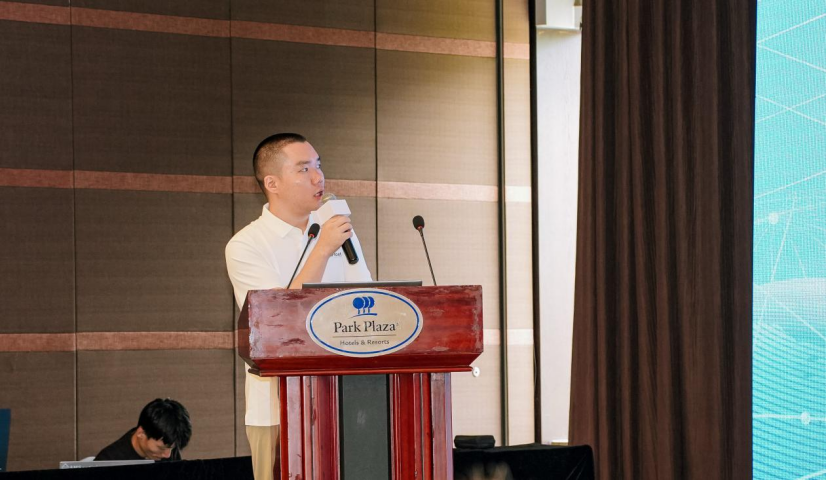
Sitan Li: Putting HiFloat into Practice with Real Models
Processor algorithm expert Sitan Li explored what happens when HiFloat is integrated into actual models. She demonstrated applications and performance optimization across LongCat, DeepSeek, Wan, and Qwen, covering training, inference, and quantization. These examples show HiFloat evolving from a data format proposal into a technical system that can be validated across different models and tasks.
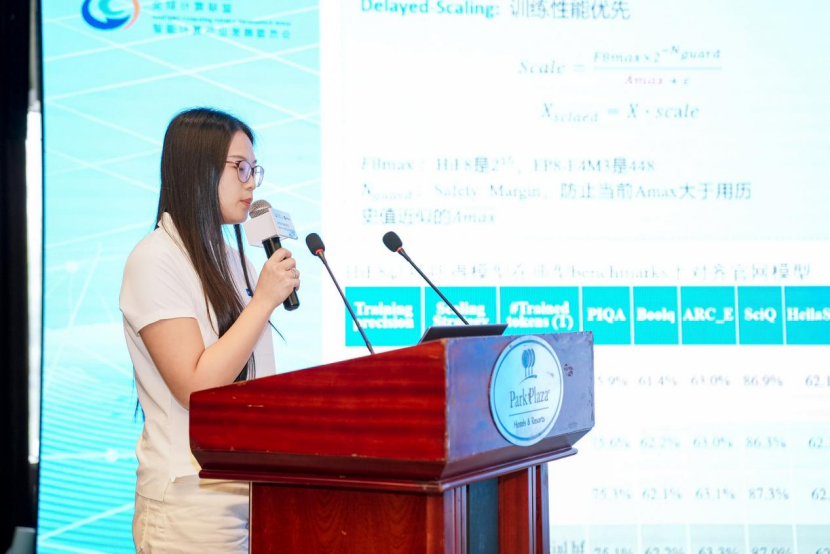
Lu Lu: Unlocking Platform Performance Through Operators and Communication–Computation Integration
Lu Lu, Professor at South China University of Technology, discussed performance optimization of operators and template libraries, alongside industry ecosystem practices. In selected communication–computation integration tests, partitioning data and optimizing pipeline concurrency delivered double-digit percentage performance gains over the baseline in some scenarios. These results are being extended to practical applications through open-source template libraries, compilation tools, and industry projects. Realizing the value of low-precision computing ultimately depends on coordinated optimization of chips, operators, compilers, and applications.
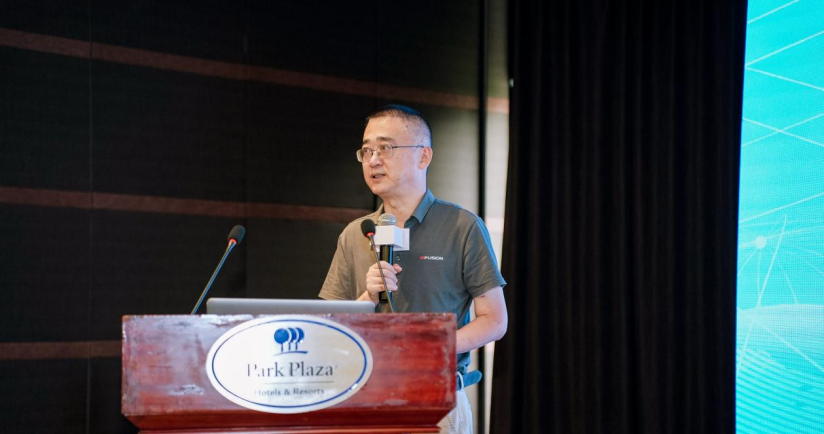
Feng Ren: As Computing Accelerates, Data Transfer Becomes a New Bottleneck
Feng Ren, a technical expert at Infinigence AI and author of the Mooncake Transfer Engine, shifted the focus from computation to data transfer. He noted that low-precision inference reduces memory usage and accelerates computation and memory access, making data loading, KV cache movement, and cross-node communication a larger share of total latency.
Low precision reduces the size of individual data blocks, but does not automatically resolve where data should reside, which links it should travel over, or how to fully utilize multiple network interface cards. Computing and data-transfer optimization must therefore advance together.
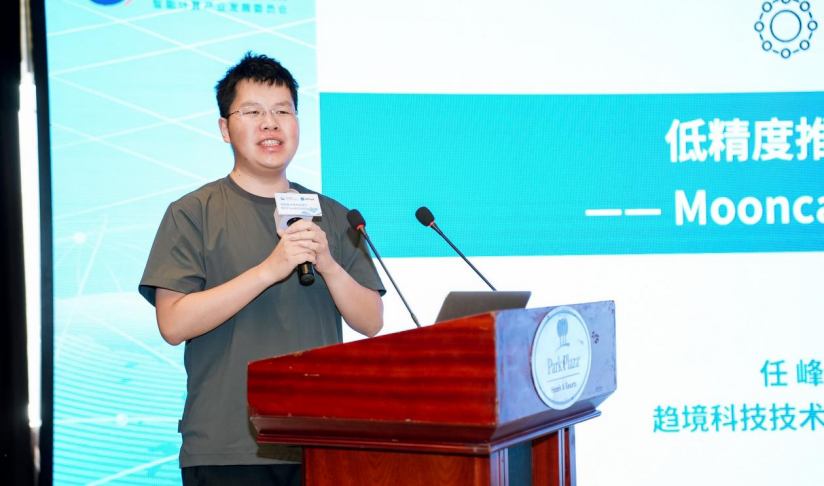
Rongchen Zhou: Streamlining Models with Low-Precision Quantization Tools
Rongchen Zhou, a Senior Ascend Engineer at Huawei Technologies Co., Ltd., introduced msModelSlim. The quantization tool turns manual tuning into an engineered workflow and describes different quantization algorithms through composable configurations, making approaches easier to reuse across models. Quantization modes and model adaptation protocols connect tools, operators, and inference frameworks. Future development will integrate a quantization knowledge base and agent capabilities to further automate quantization strategies, sensitive-layer identification, and model adaptation.
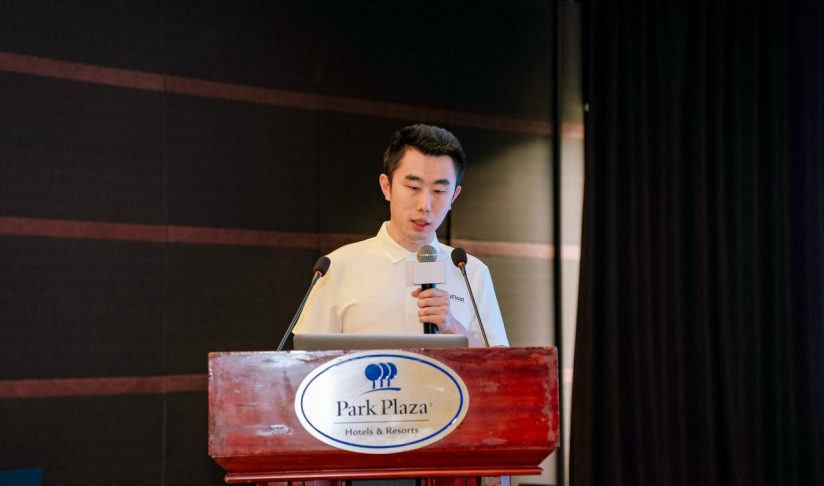
A Complete Technology Chain for Low-Precision Computing Takes Shape
The conference connected partners across models, algorithms, chips, software, networking, and standards. The response was enthusiastic, with attendees engaging in active discussions and in-depth exchanges.
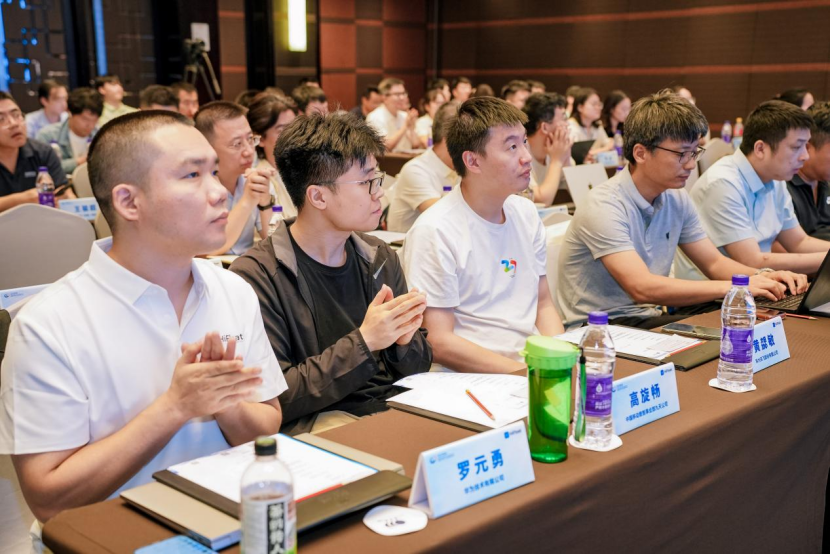
Low-precision computing requires contributions across companies, models, and formats. Its performance and energy-efficiency advantages can translate into industrial value when data formats execute efficiently on chips, receive native software framework support, are validated across models, and are supported by open standards and a developer ecosystem.
Guided by openness, sharing, and joint development, the HiFloat community will continue connecting industry partners to explore greater AI computing efficiency at lower precision.